Latest news
Blog & insights
Jan 6, 2026

Lee Webster
A reflection on 2025 and where is the art world heading
As 2025 draws to a close, I find myself returning to a familiar question, one that resurfaces every few years: where, exactly, is the art world heading?
To look forward, it often helps to glance back. This past year offered no shortage of moments that made us laugh, question, and occasionally feel uncomfortable. All of which are signs that art is still doing what it should.
One of the most talked-about artworks of recent years returned to public conversation again in 2025: the now-infamous banana taped to a wall. Maurizio Cattelan’s Comedian has become shorthand for everything some people love to criticise about contemporary art. Easy to mock, easier still to turn into a meme.
The banana itself was never meant to be precious. What it does, and continues to do, is force a question about value. Are we paying for the object, the idea, or the spectacle that surrounds it? One of the editions was even eaten by its purchaser, adding another layer of performance to an already provocative work.
Is this simply a publicity stunt designed for social media, or something more reflective of how we now engage with art? Does contemporary art need to be instantly legible to survive in the age of scrolling, or are we just thinking differently about meaning?
This strategy is not new. Tracey Emin’s My Bed shocked audiences in the late 1990s with its raw display of intimacy and disorder. Initially dismissed as lazy or attention-seeking, it now reads as a cultural marker. Vulnerability, confession, and the everyday became legitimate artistic material. The outrage faded, but the work remains relevant.
That ongoing debate around effort, meaning, and worth was neatly distilled this year by David Shrigley’s Money for Old Rope. At first glance, the work feels playful, even absurd. Beneath the humour sits a sharp critique of consumer culture and the art market, where price and meaning do not always align. As with much of Shrigley’s work, it provokes laughter, discomfort, and reflection in equal measure.
But 2025 was not only about bananas and old rope. This year also marked a resurgence of interest in Surrealism as the movement approaches its centenary. Major exhibitions around the world reminded audiences just how deeply the surreal remains embedded in our collective imagination.
Across the Atlantic, Art Basel Miami Beach delivered its own share of spectacle. A group of robotic dogs programmed to walk, sit, and respond to commands became an unexpected focal point. Supporters praised the installation as a commentary on surveillance, automation, and humanity’s growing reliance on machines. Critics questioned whether it was meaningful art or simply a hype-driven gimmick. The debate itself became part of the work.
That, arguably, is the point.
Artists such as Marina Abramović have long explored this territory. Her endurance-based performances and direct audience participation blur the line between artwork and viewer, raising questions about vulnerability, power, and connection in an increasingly mediated world.
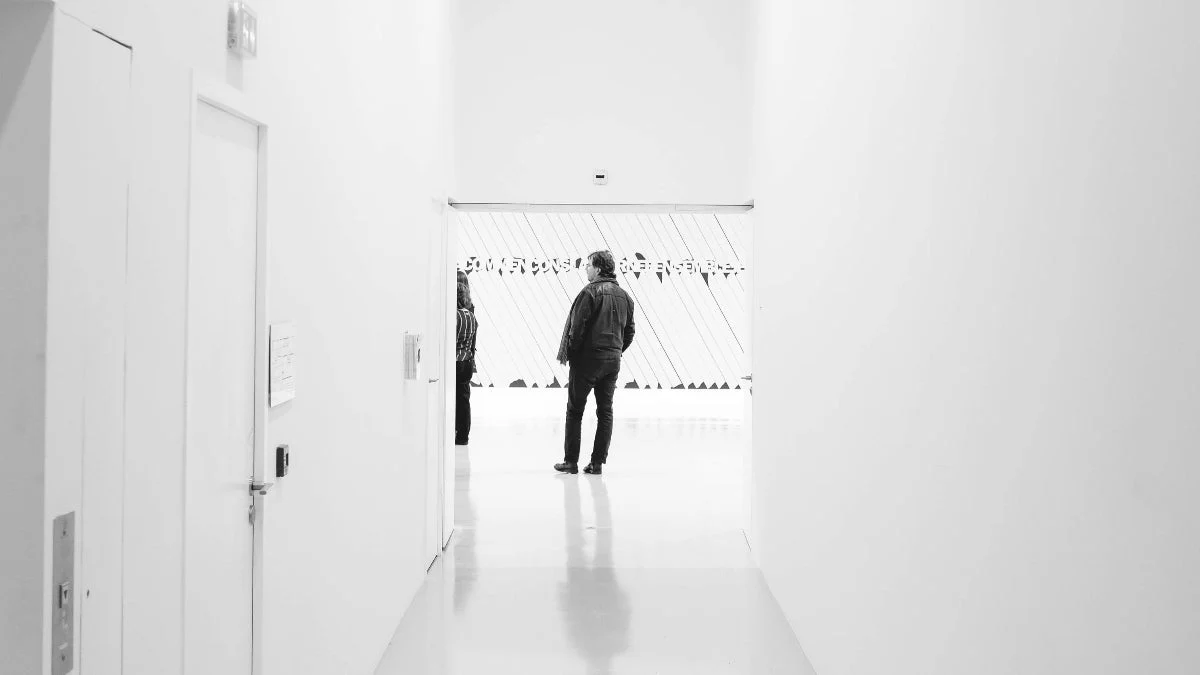
Alongside this shift, art has increasingly moved beyond traditional white-walled galleries. Public installations in streets, parks, shopping centres, and overlooked urban spaces have become central to how audiences encounter contemporary work. Projects such as Wymondham Alley of the Arts and the street-based works seen across Cromer demonstrate how art can meet people where they already are, removing both physical and psychological barriers.
So where does this leave us?
If 2025 tells us anything, it is that the art world is less concerned with crafting silent masterpieces and more invested in generating moments. Moments that circulate online, spark argument, and collapse the distance between gallery and street. The object alone is no longer enough. It must carry a story, a tension, or a question worth engaging with.
These reminders divide opinion. Some see them as lazy or absurd. Others view them as accurate reflections of modern life: ironic, noisy, and constantly questioning authority. This is not necessarily a decline. It may simply mirror the world we live in.
Looking ahead to 2026, audiences will once again be able to see My Bed at Tate Modern. Closer to home, Norwich will host the first Under The Stalls Art Fair at the Undercroft Gallery from 23–26 April.
A reminder that some of the most compelling conversations in contemporary art often begin right on our doorstep.
Lee Webster, founder of Urban Art Store