
Latest news
Blog & insights
May 12, 2026

Lee Webster
Beasts, couples and crazy geometry: Lynn Chadwick arrives at Houghton Hall
The grandest stage in rural Norfolk opens its doors once more, this time to one of post-war Britain's most visionary sculptors.
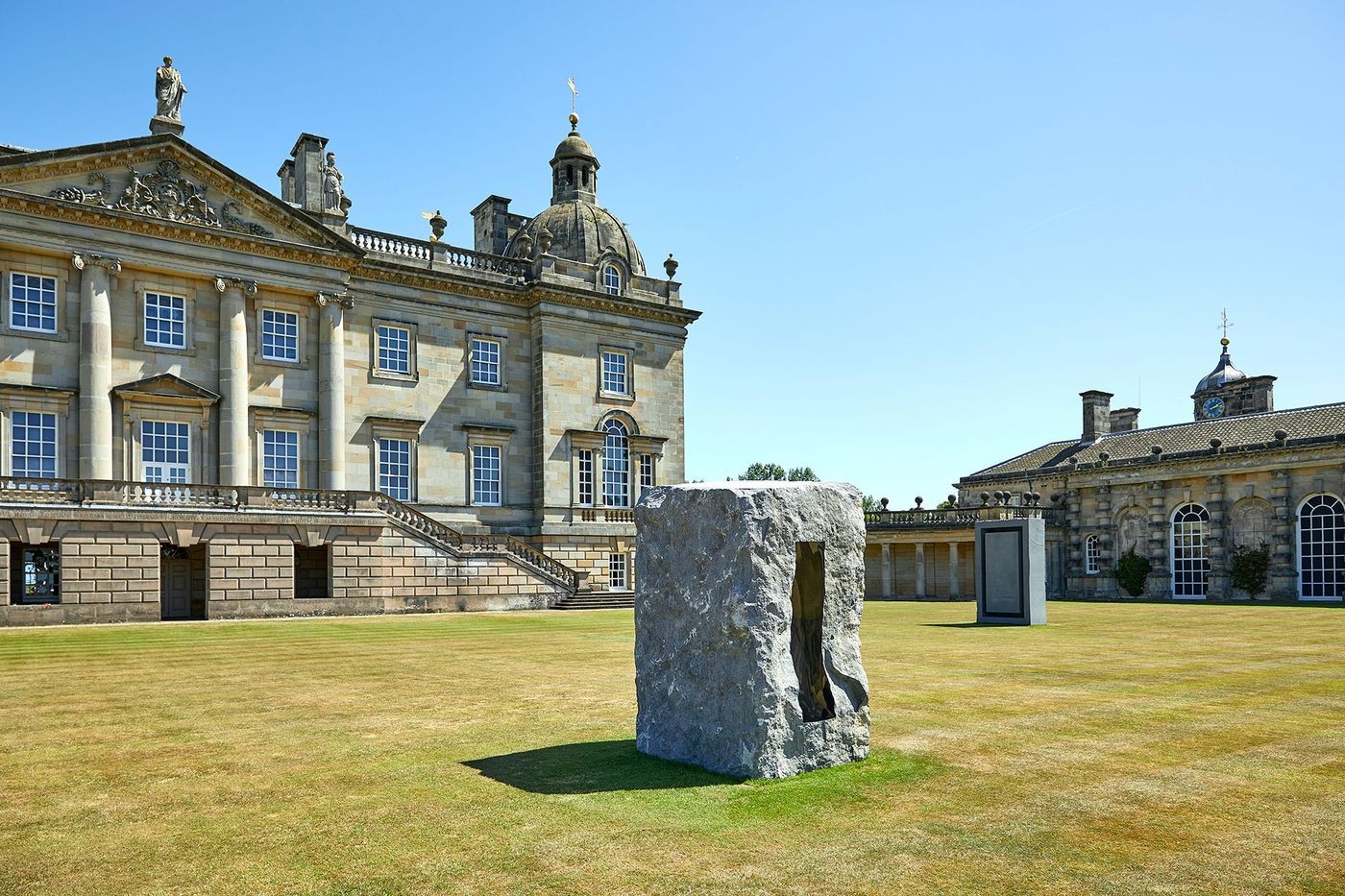
There is something quietly audacious about Houghton Hall. Standing beneath the flat, wide skies of north Norfolk, a world away from any white-walled gallery, this Palladian masterpiece has, over the past decade, quietly become one of the most compelling contemporary art destinations in Britain.
This summer, it adds another chapter: a major retrospective of the work of Lynn Chadwick CBE. It is the largest exhibition of Chadwick's work to be mounted anywhere in the UK in more than twenty years, the first significant showing since the Tate Britain retrospective in 2003, the year of the sculptor's death.
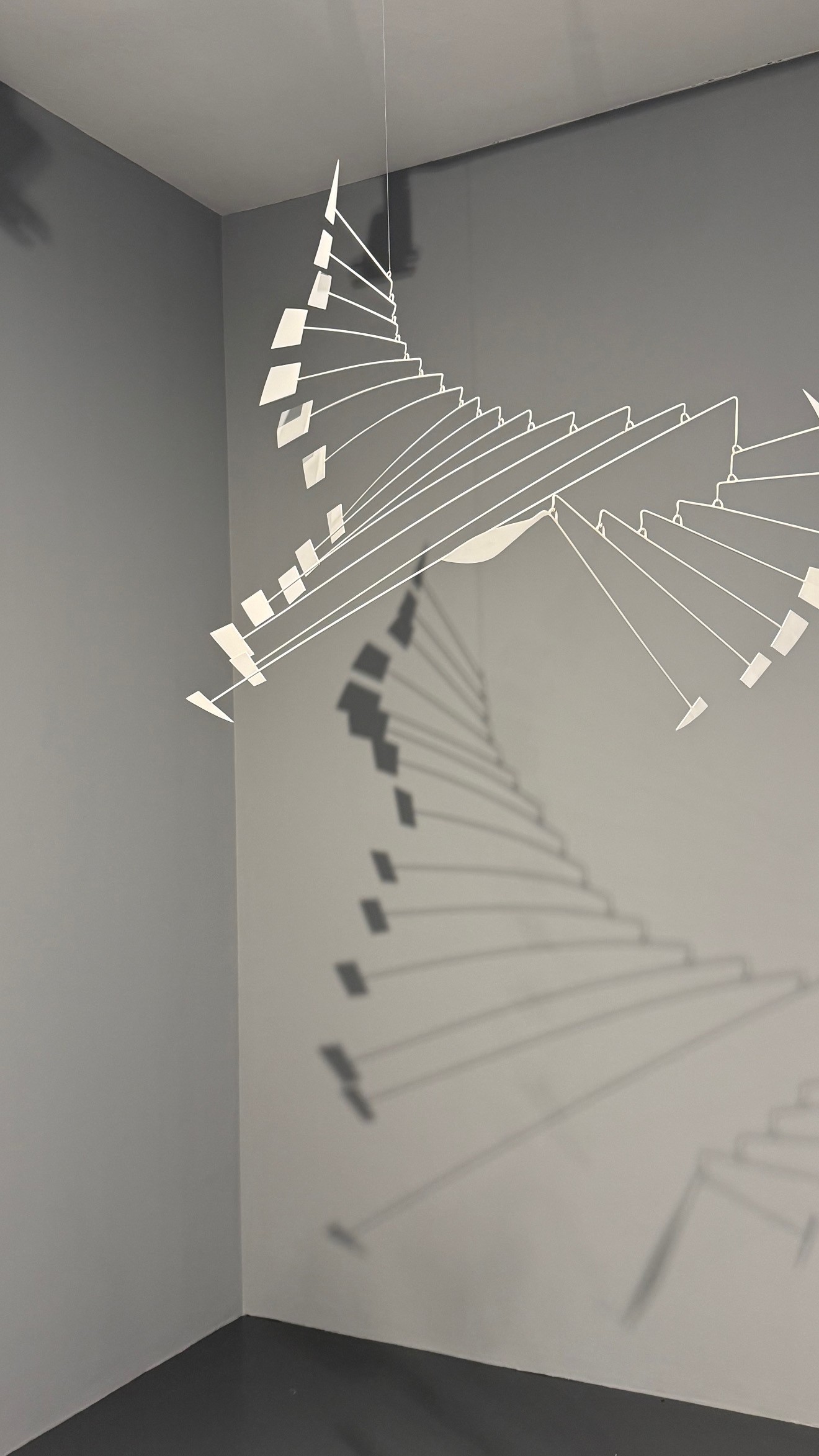
Spanning four decades of his career, from the fierce, angular energy of the 1950s to the more reflective work of the 1990s, the show presents thirty pieces across the house and its extensive grounds. There are early kinetic sculptures, a powerful assembly of his celebrated "beasts", and a moving selection of the paired figures, the "couples", for which Chadwick became internationally famous.
All of it is set in dialogue with the Neo-Palladian architecture of Houghton and its sweeping parklands, curated by Pangolin London, the gallery which has long been the guardian of Chadwick's legacy.
Houghton Hall was built in the 1720s for Sir Robert Walpole, Britain's first Prime Minister. Its history is inseparable from art: the vast collection Walpole assembled was sold off by his descendants and purchased by Catherine the Great for £40,000, ending up in the Hermitage in St Petersburg. The house has lived, ever since, with the memory of that dispersal.
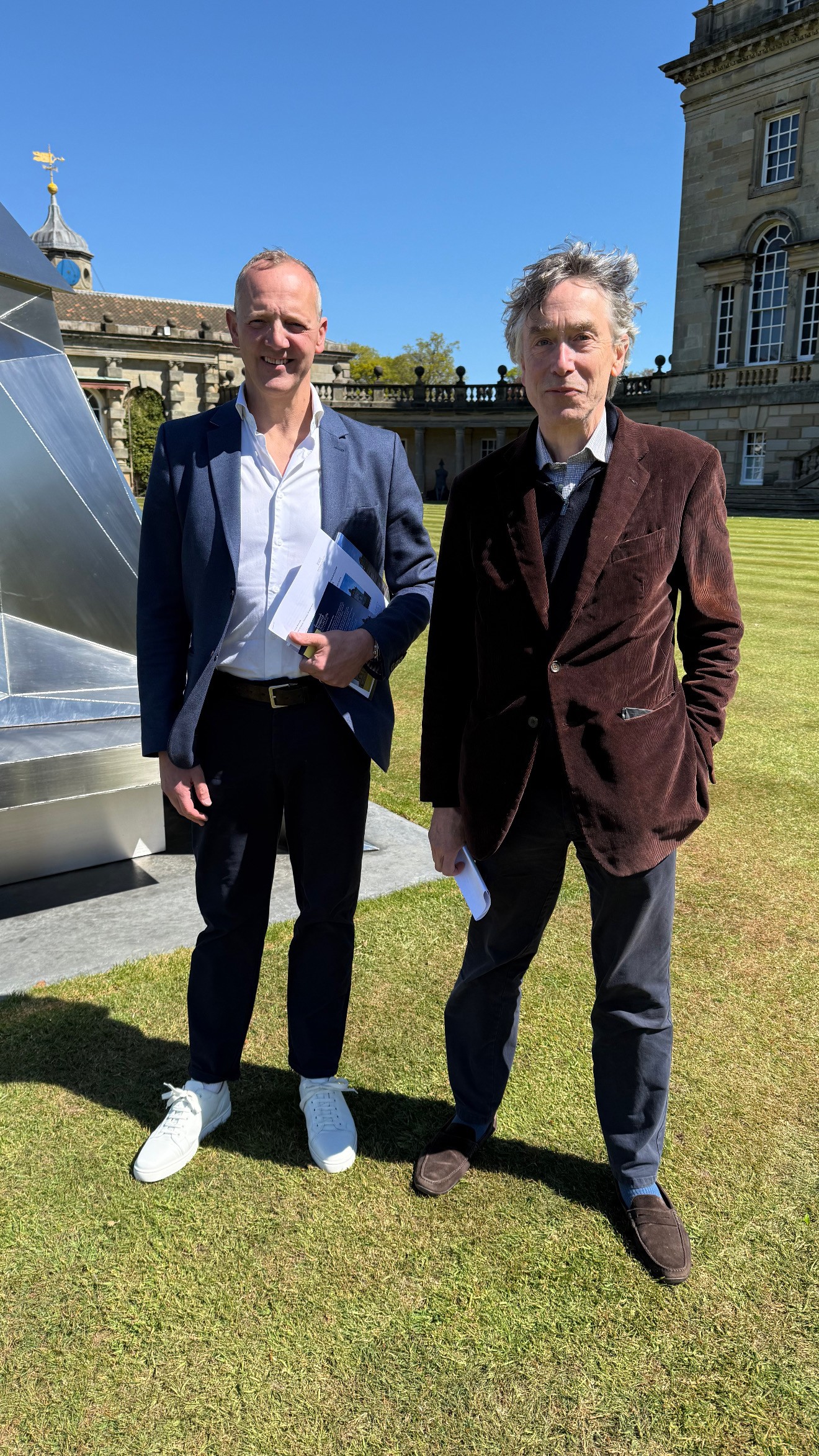
I sat down with Lord Cholmondeley to talk about a decade of exhibitions, and how a Georgian estate in rural Norfolk has become one of Britain's more unlikely cultural institutions.
Since 2015, artists here from James Turrell to Antony Gormley to now Lynn Chadwick represent an extraordinary roll call. How do you persuade artists of that calibre to come to rural Norfolk?
"I think word travels. I was collecting James Turrell and Richard Long well before the first shows, that's how the relationships began. And once artists of that calibre could see that we would do things properly and professionally, that it would be good for them, that the setting was genuinely special, that it would be presented at the highest quality, they became willing to come. The programme builds on itself. Artists talk to each other."
"The first show was nerve-wracking, I won't pretend otherwise. We'd spent three years planning it. We had over 120,000 attend and that set the tone of future shows. Artists saw how Lord Cholmondeley put on a show with particular finesse."
I asked Lord Cholmondeley what artists he had in the pipeline. Nothing was given away, but "three or four artists we are considering for future exhibitions". It is standard practice for galleries and museums to plan years ahead, whereas James was only confirmed in January of this year.
I asked what impact these exhibitions have locally in tourism, in hospitality, and in the confidence of the region.
"It's been very significant. The popular shows have attracted double our usual visitor numbers, and that has a real impact on the surrounding area, on hotels, pubs, restaurants, on the confidence of local businesses who might not have imagined that people would travel specifically to north Norfolk for a contemporary art exhibition. The word spreads. Norfolk has always been underestimated in that regard."
If someone from London says, 'Why should I travel to Norfolk for an exhibition?' what would your answer be?
"To see a major contemporary exhibition in a historic setting, rather than in a white-walled gallery. That's the honest answer. There are very few venues in the world where you can see major contemporary work both inside a house of this quality, in rooms that have barely changed since the eighteenth century, and in grounds of this scale. It is a completely different experience. The work speaks differently when it is surrounded by sky and landscape and two centuries of history.”
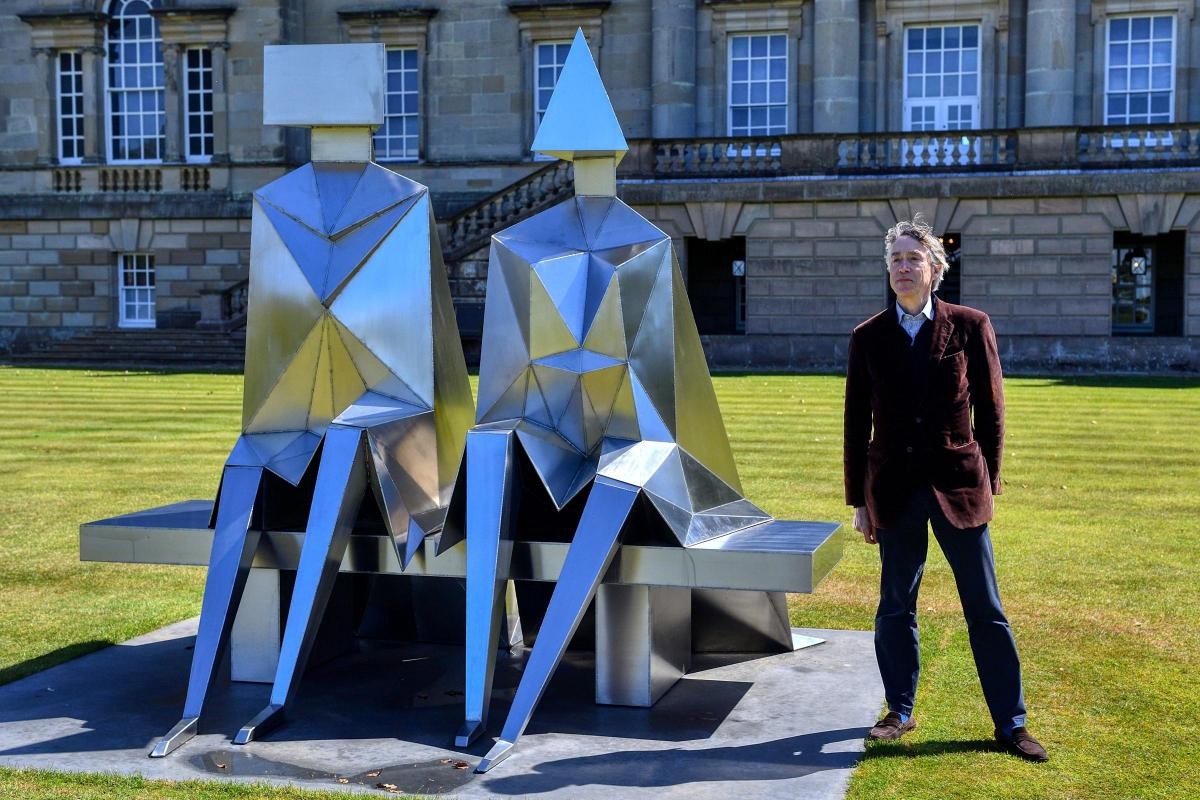
The curatorial intelligence behind the Chadwick show belongs to Pangolin London, the gallery which has represented the Chadwick estate and carried the sculptor's spirit forward. Those who have seen the installation already speak of the care that has gone into the placement of each piece, the sense that nothing is accidental, nothing out of place, and that every work has been considered in relation to both its immediate surroundings and the larger choreography of the whole.
The formal, Neo-Palladian geometry of Houghton, its symmetries, its axiality, its cool limestone precision, turns out to be an unexpectedly powerful foil for Chadwick's work. His sculptures are alive with what one might call crazy geometry: angular, off-balance, prickling with energy. Against the measured formality of the house and gardens, that organic restlessness becomes all the more visible and all the more strange. The rigor of the setting makes the wildness of the work legible in a new way.
Chadwick himself was not a man who wasted words. Those who worked with him in his later years recall an artist who started at eight in the morning, broke for coffee at eleven, finished at five, and expected his team to keep pace. He didn't converse much, and when he did, he was to the point.
What the work expresses, vision, formal daring, a sense that sculpture could carry a kind of existential weight, he largely let speak for itself.
"Making process," as one person close to the estate described it, "was a privilege of life. He had an incredible vision. He was ahead of his time."
That sense of Chadwick's prescience is part of what makes the show feel timely rather than retrospective. There are connections to be drawn between his work and currents in contemporary sculpture that emerged long after his death, in the relationship between the organic and the geometric, between figure and abstraction, between the human body and its environment. Houghton, with its combination of formal architecture and open landscape, draws those connections out.
Surprisingly, this was my first visit to Houghton Hall, but not my last.
I would encourage anyone to visit the stately home and beautiful surroundings, get lost in the magical world of Lynn Chadwick, and experience one of Britain's most unique cultural settings for themselves.
Lee Webster is the Founder of Urban Art Store in Norwich.