
Latest news
Blog & insights
Jun 26, 2026

Lee Webster
Give voice to homeless one portrait at a time
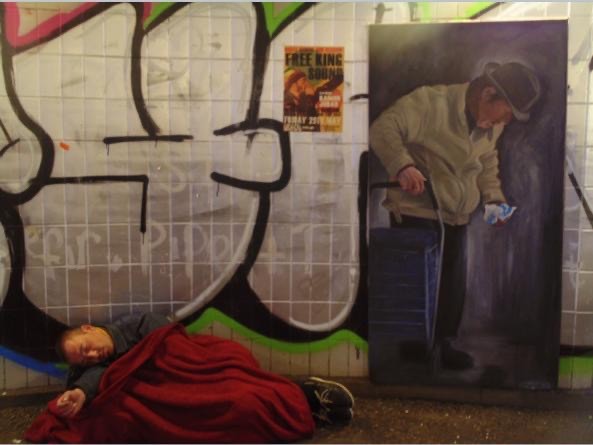
Norwich artist Devin Smith paints people who are homeless or facing homelessness, not as subjects, but as collaborators. Lee Webster sat down with her to explore the relationships, the craft, and the quiet power of being truly seen.
When we lose hope in someone or they lose hope in themselves their story rarely gets told. For people experiencing homelessness, that silence is compounded by addiction, mental ill-health, and the daily indignity of being looked through rather than looked at.
Devin Smith has spent years quietly pushing back against that.
A painter by trade, Devin is perhaps best known locally for her work at weddings. But her true passion lies elsewhere, in the streets of Norwich, and in the careful, unhurried process of painting people the world has too often overlooked.
We first came across Devin's work through our own connection to homelessness services. Having spent twenty years working within Norwich City Council's homelessness department, taking part in the city's night counts, hearing stories that stay with you long after we understood immediately why her work matters. We sat down with her to find out more.
Devin's introduction to the homeless community came through her mother, who introduced her to someone in need of support. The lesson her mother passed on was a simple one: don't judge.
"I used art to help someone through collaborative projects and conversation," Devin tells us, "and eventually gifted a painting to them. From there, it naturally continued as I met their friends.”
What started as a single act of connection gradually grew into something larger a body of work built on relationship rather than representation.
Devin doesn't seek her subjects out in any formal sense. She doesn't approach strangers with a sketchbook. The process is slower and more considered than that.
"I've spent a lot of time getting to know people first," she says, "to understand whether and how they would want to be painted or presented publicly. Spending time together helps you understand whether the consent is truly cognitive consent, while also allowing you to understand their stories.”
Where necessary, she also consults the organisations and people who know her subjects well staff at the Ark, the Salvation Army, and others in the community to better understand someone's health and their capacity to make an informed choice about taking part.
Trust, she says, has rarely been a barrier. "I usually begin by showing people what I do and explaining the intention behind it. If they don't want to proceed, there's no pressure. There's no money involved just a painting and time spent getting to know their stories."
Devin's craft is rooted in realism detailed, considered, true to life. But the medium and form of each piece is shaped by the person at its centre.
We asked which one piece stands out. "One of the most prominent uses of mixed media was with an individual who chose to transform an old broken bed into a book a page into his life, his habits, and his mental health." That piece alone took around a year from first meeting to completion.
The aim in every case is the same. "The aim was always to capture a moment that celebrated what often goes unseen," she says. "The relationship between Ashley and his dog, Jim and his bear, Nora and her story of overcoming Charles Bonnet Syndrome these were all ways of bringing attention to people and experiences viewers may otherwise overlook.”
The paintings always served a practical as well as an emotional purpose, Devin explains "whether that was helping someone feel seen or raising money for a bill.”
And the impact on the people involved has, at times, been profound. One person, she tells us, began making significant changes after being painted: coming off hard drugs, changing his appearance, and beginning to see himself differently.
"It shouldn't take a painting for someone to feel seen," she reflects, "but sometimes it did. I think I'd probably feel the same way.”
The subjects keep the work. They see the finished piece, and the reaction, Devin says, is generally one of excitement and a sense of being valued. Several of those she has painted spoke publicly about the experience at a street exhibition around a decade ago and the words people used to describe it have stayed with her.
For Devin, the work doesn't end when the painting is finished. "I've kept friendships with most of the individuals I've worked with, especially those I met on the streets of Norwich.
The stories they shared with me are stories I continue to share with other people." It is, at its heart, a form of witnessing and of refusing to let people disappear. "It shouldn't take a painting for someone to feel seen but sometimes it did.”
This interview means something personal to us. Last year, members of our team ran the London Marathon to raise money for Shelter, the national homelessness charity. This year, we have been selling Banksy-branded Tesco Bags for Life in support of St Martin's Housing Trust, Norwich's leading provider of housing and support services for people experiencing homelessness in Norfolk.
Our next project will be around raising awareness of the people who are either homeless or threatened with homelessness in partnership with a famous artist!

